22 April 2026
3rd Symposium on Digital Art in
Ireland
University College
Cork
Slide
deck
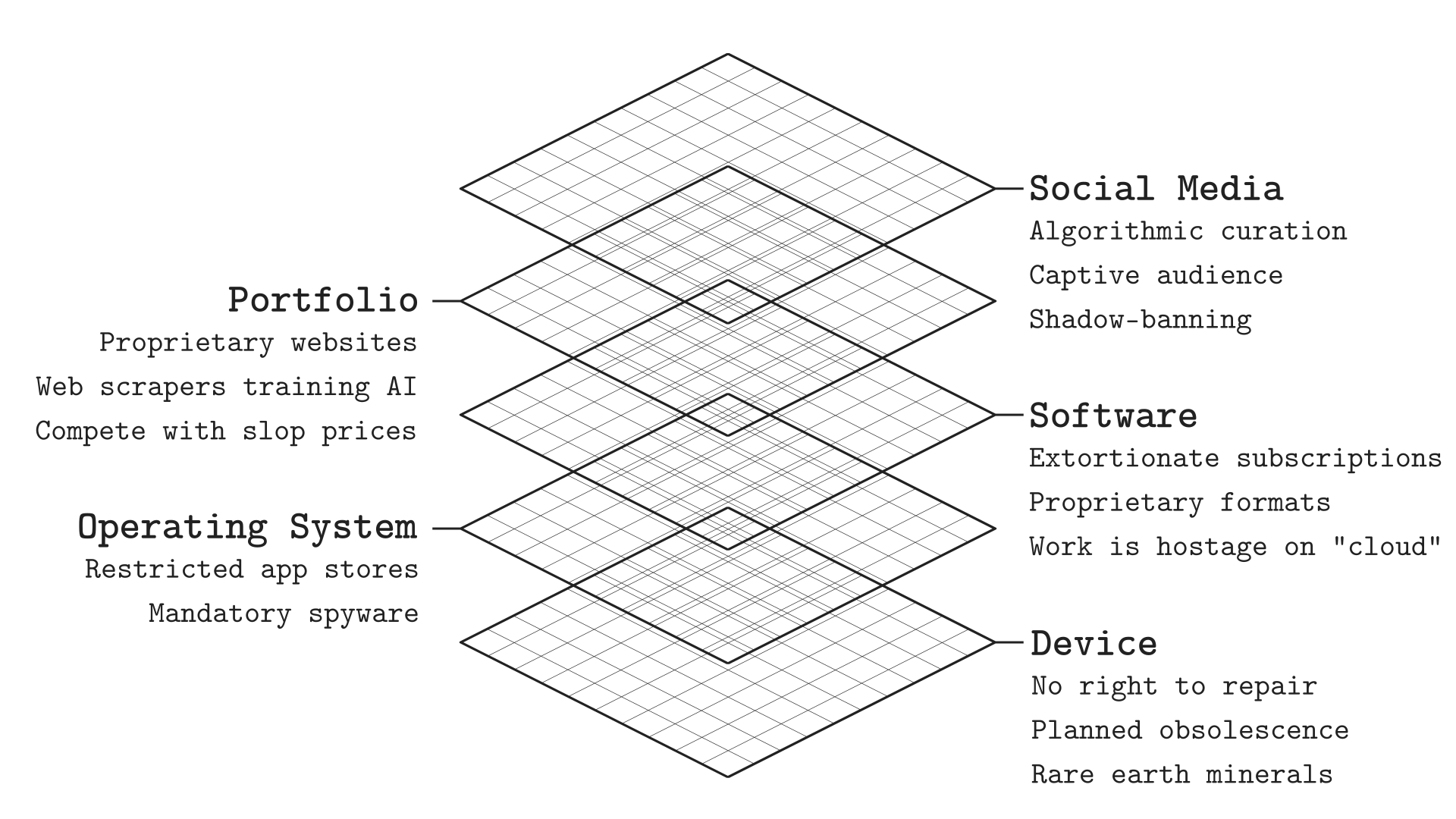
This paper’s starting premise is that digital tools and platforms are increasingly hostile places for creative practice. Obstacles and power relations unfavourable to creative practitioners are present all the way down the so-called ‘stack’; from extortionate subscription prices for proprietary software tools, to the influencer economy of social media, to recent escalations with AI webcrawlers trawling portoflio sites for training data. In this environment, digital creative practices, tools, and skills need to be actively nurtured and defended.
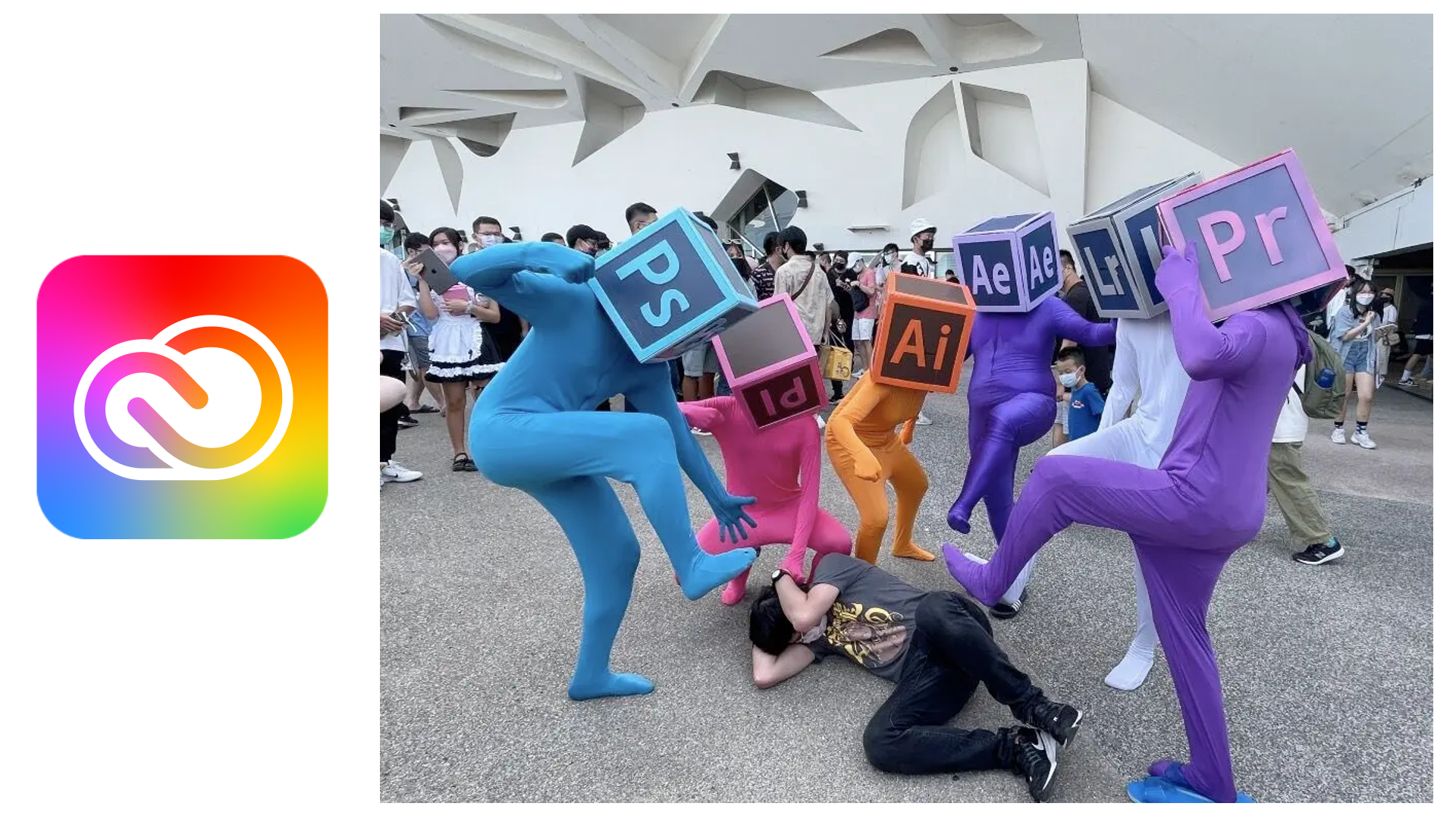
More papers should be written about Adobe’s political economy. These would trace the history of a graphics software company that transformed into a cloud-based data company aspiring for Big Tech status, holding entire creative professions hostage in the process.
As the vectoralist class consolidates its monopoly on the means of realizing the value of intellectual property, it confronts the hacker class more and more as a class antagonist. Wark (2004)
If we follow Mackenzie Wark’s analysis, the deterioration of the power relations between creative workers and Adobe can be seen as a vectoralist escalation to monopolise creative production and output. Ongoing for decades, this has reached new levels with so called “AI” driving an exponential bubble of data vectors, compute, and of course finance. As bad as they are, these assaults from Adobe on creative practices are nothing compared to those of the real Big Tech vectoralist class - those reaching hyperscale radicalisation under a second Trump administration.

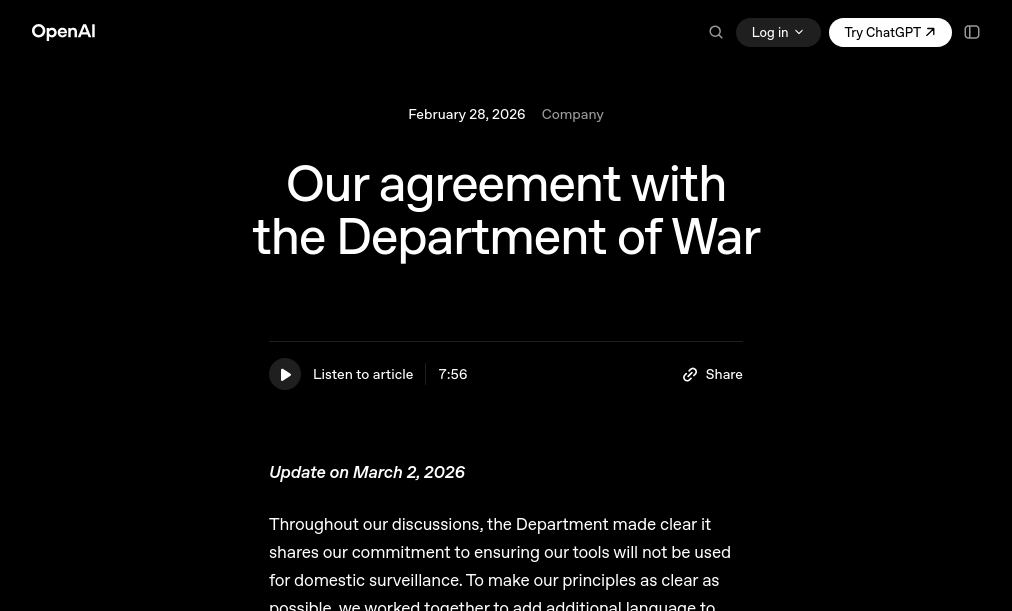
Beyond the ownership and control of one’s own means of creative production, the question is: what broader political economies are we supporting with our use of digital tools and services? For “critical” artists and researchers these are increasingly unreconcilable with basic principles of humanity and life.
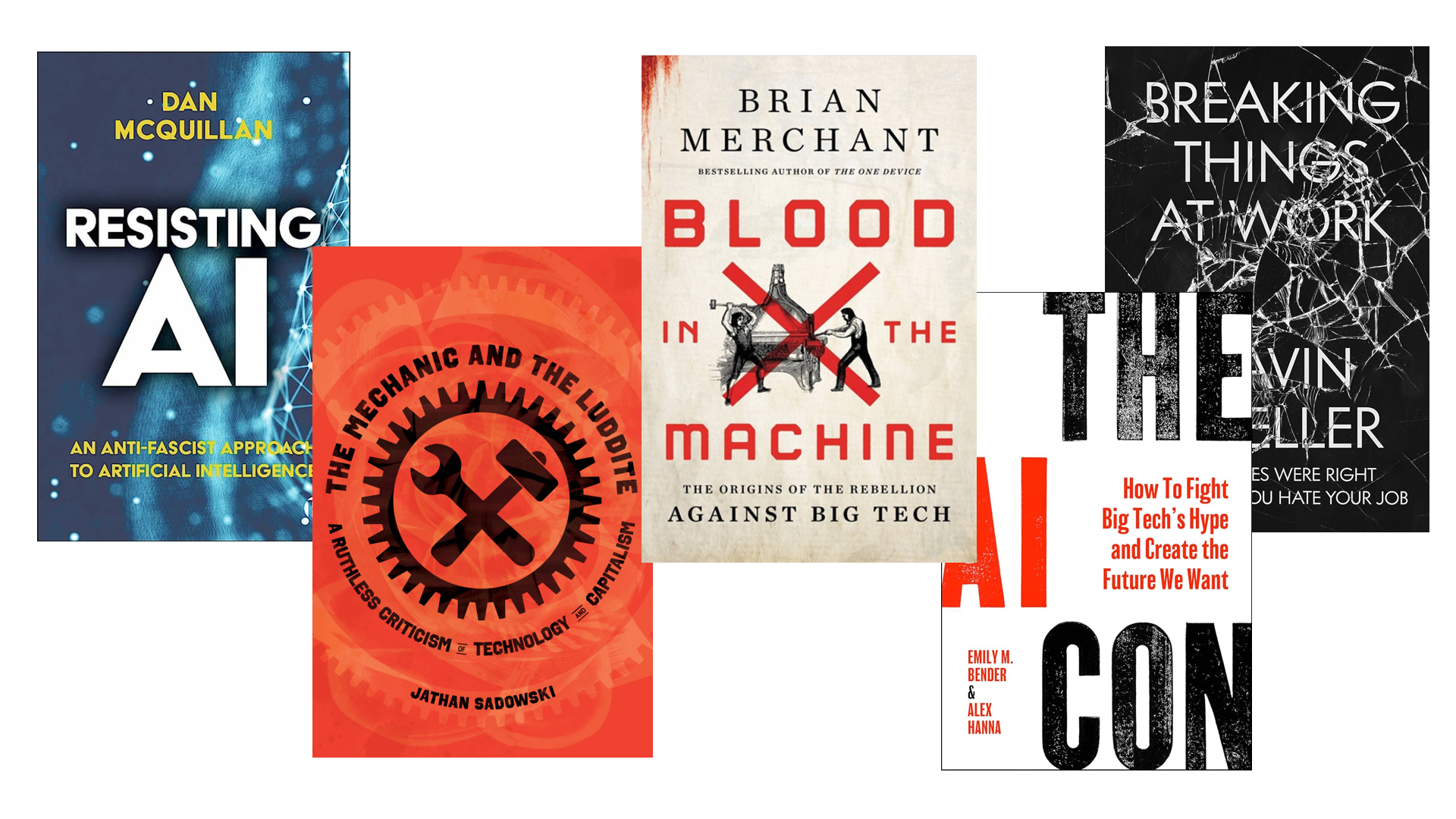
Searching for new critical narratives to hold onto in this techno-political climate, some authors, researchers, and journalists have been reviving a 200-year-old social movement as a powerful counter-imaginary: the luddites. Textile workers in early 19th-century England, they became known for sabotaging automated machinery such as stocking frames that were being imposed by factory owners.
While “luddite” has since been used as a derogatory term for those opposed to progress and technology, the term is enjoying a recent resurgence with books and articles revisiting the history and politics of the luddite movement and giving it a new relevance in light of contemporary technological struggles.
It transpires that the luddites had very little to do with being anti-technology. Instead they politicised it as part of a wider struggle attempting to stop the deterioration of a highly skilled craft towards low-skilled low-wage labour. Translated to today’s context, we can see the luddites as radical creative technologists; highly knowledgeable of their tools and of the power relationships threatening their livelihoods.
The luddites encourage us to root for the workers in their struggle against vectoralist bosses. It’s a politics of refusal and sabotage that finds an echo in today’s groups such as No Tech for Apartheid where tech workers refuse to see their work deployed for oppression and genocide.
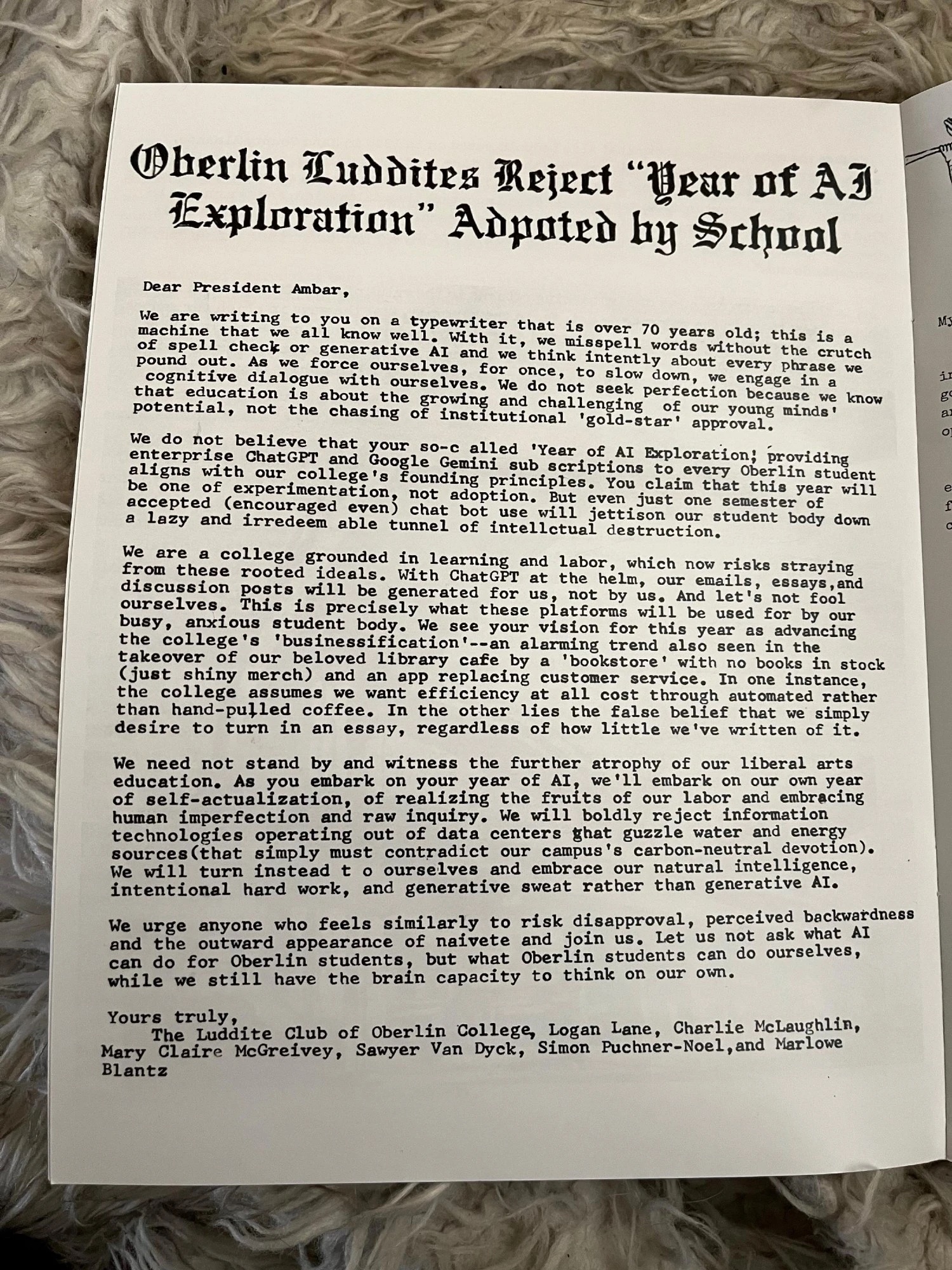
In a much more mundane but no less powerful setting the Luddite Club is a worldwide movement of teens that refuse to use smartphones and just meet up in the park to chat, and also reject AI experimentation at school. (see also Vadukul (2022) Marx (2026))
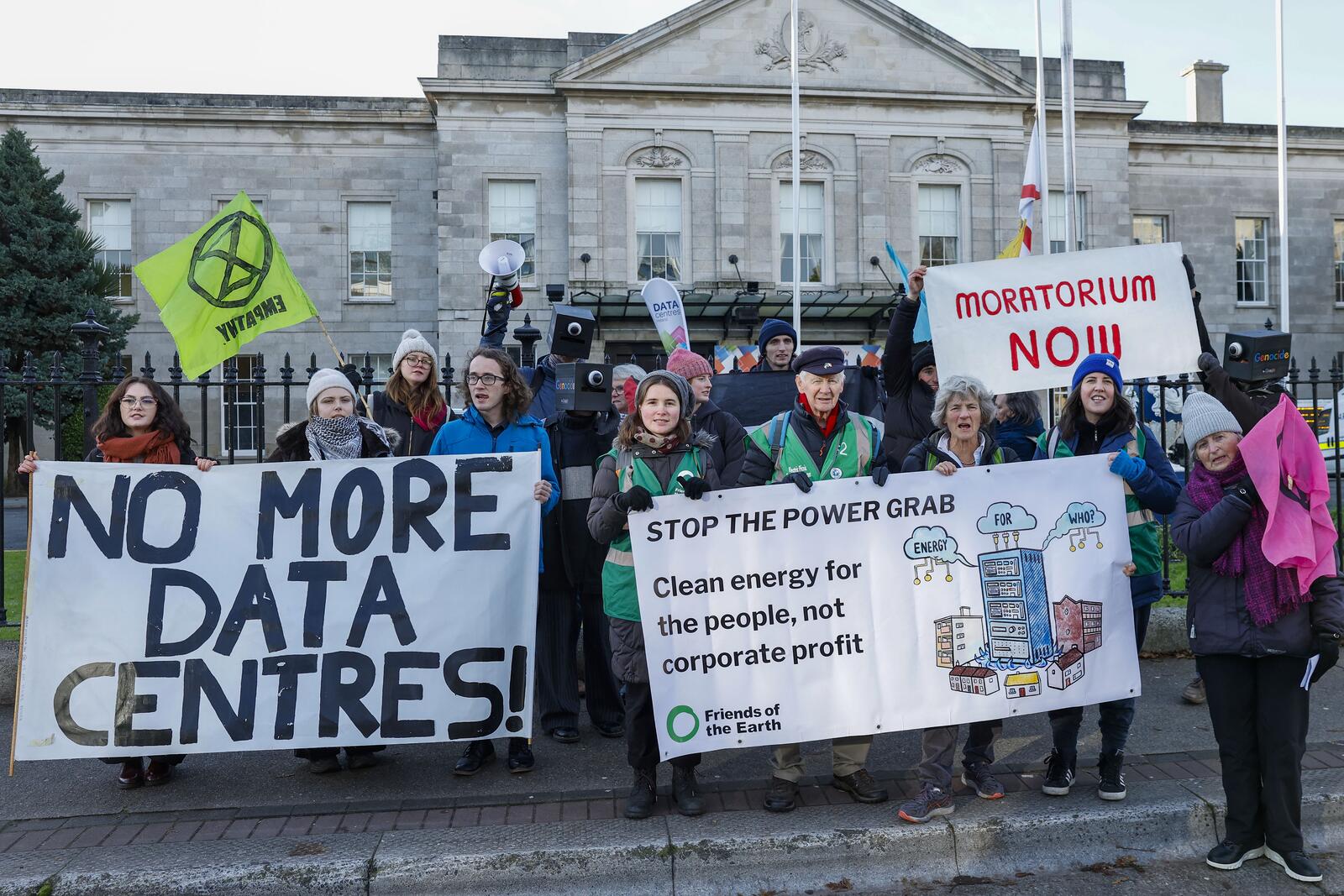
In an Irish context, campaigns against datacenters represent another form of luddite pushback – opposing infrastructure projects that already consume more power than all urban households comnbined (Murphy and Brodie, 2026). In a much more literal manifestation, People Before Profit TD Paul Murphy wrote a piece about the luddites in Rupture magazine last year, using them to articulate a politics of technology (Murphy, 2025)

There is something a little sad about 200-year-old textile workers being the only available imaginary against the complete hegemony of Big Tech. It is, however, encouraging to see them invoked in everything from direct action to meetings in the park.

It is against this backdrop I am starting Luddite Academy, a project questioning what luddite creative practice might look like. I aim to investigate the material conditions and power relations that shape digital creative practice; producing, curating, and disseminating counter-strategies that help reclaim the means of digital production.
I use terms like “creative practice” to encompass everything from the artist’s studio to the university and scientific journal in this conversation. This paper is also the first time I ever present this project, so it is very early days. First, I’ll detail some of the references and experiences going into the project, before sharing an initial programme of work.
This project combines a few of my interests and practices:
Free software is an example of a Luddite technology: an innovation in the interest of the preservation of practitioners’ autonomy against the imposition of control over the labor process by capitalists.
Mueller (2021)
If we focus only on the ownership and control of the means of production, the free software and free culture movements seem like they carry some of the luddite spirit. Gavin Mueller even includes Richard Stallman (founder of the GNU project) in his lineage of worker struggles that starts with the luddites. The politics of the free software movement are deeply contested, and so is Stallman as a leading figure. Addressing this properly will hopefully be the subject of a future paper, for now my time is limited so I will leave you with a reference to the critical perspective of Aymeric Mansoux (2023).
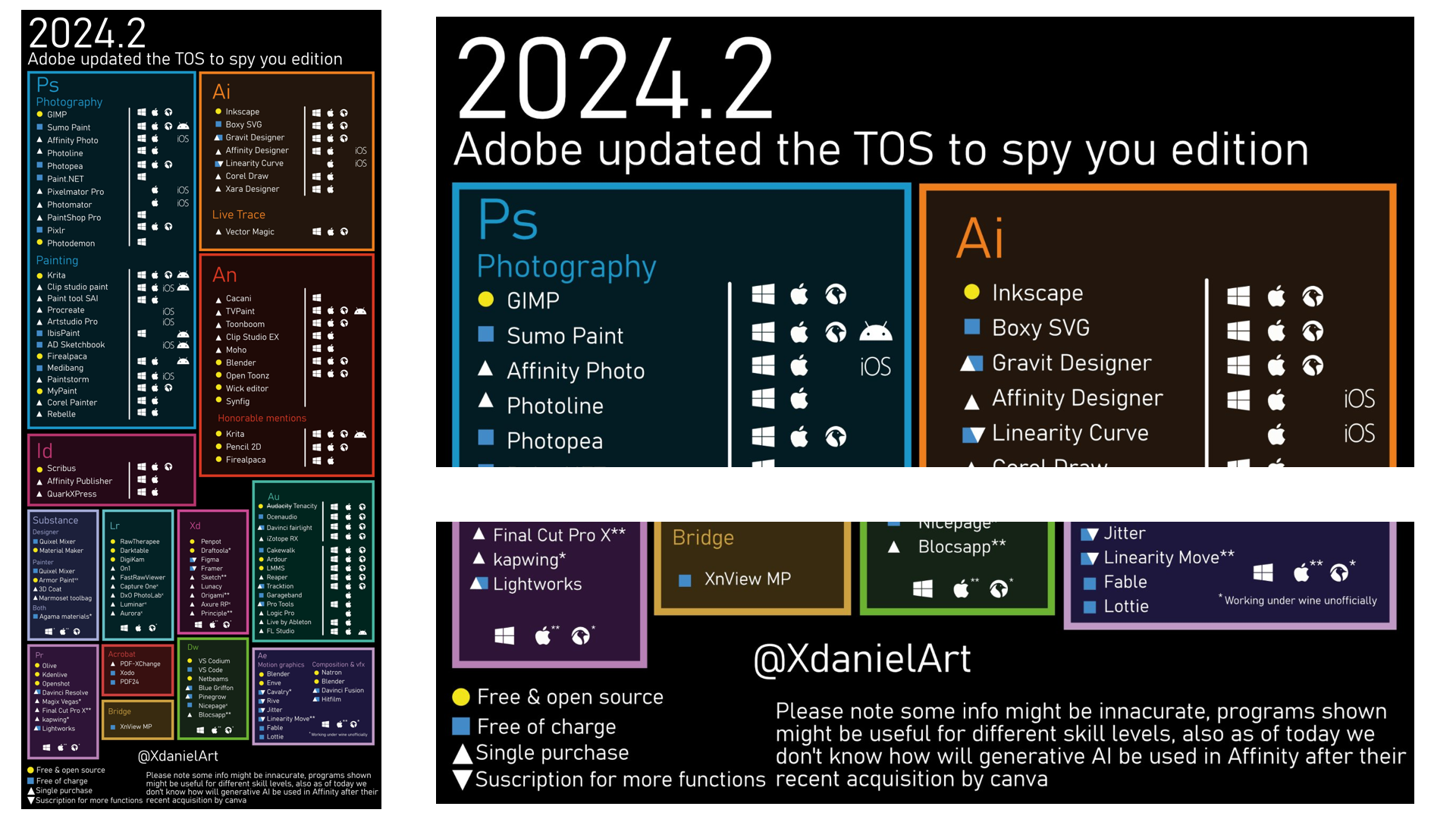
There are some great open-source software to produce art with (Blender, Inkscape, Krita, Audacity are some examples). A kind of information activism has developed around sharing alternatives to each Adobe product with big lists including operating systems and licensing models. This format is a kind of luddite tract that keeps growing and resurfacing each time Adobe does something bad and people want to leave.
While individual app alternatives are great, free software also means considering the production infrastructure for these apps. Codeberg is a nice example of mutualised non-profit infrastructure. It provides a software forge alternative to Github for free and open-source projects.
It is also very important not to limit the power of alternatives to the software itself. We must include the people that develop it, and those that keep software alive and relevant through workshops, events, communities, and knowledge bases. Collectives like Pre Post Print are key to spreading the use of free software, in this case for experimental publishing through techniques such as “web to print”.
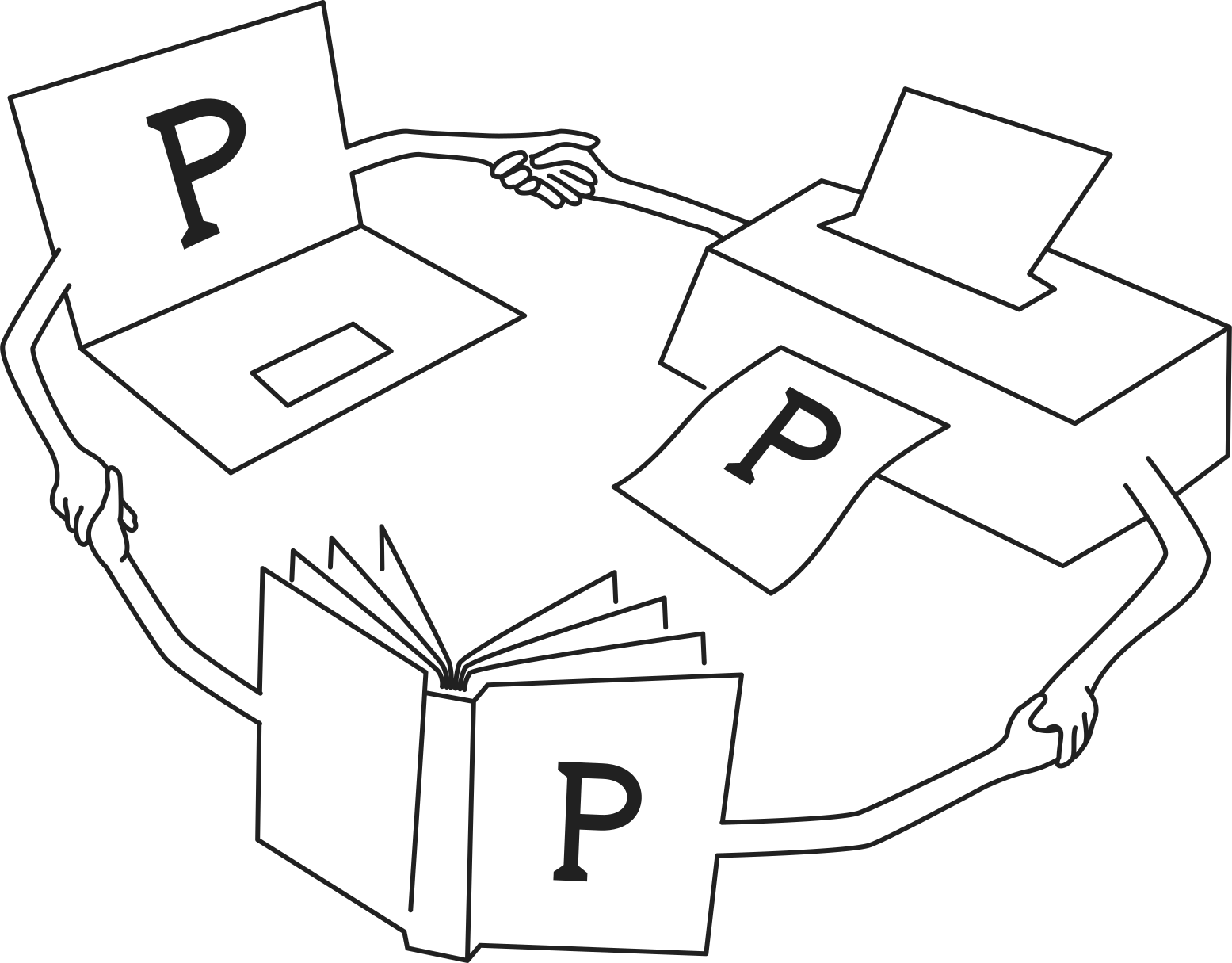
If you combine the mutualised infrastructure (Codeberg) and the group of creatives doing things (Pre Post Print), you get artist-led digital infrastructure. Administering your own digital services can be a form of artistic praxis.
Lurk is an example that is close to me. They have been providing the Institute with independent services like social media and mailing lists since 2019. They offer a suite of services such as discussion lists, chat, audio-streaming, wikis – all run by and for artists who also critically reflect on the politics of this infrastructure through articles, conferences, or workshops.
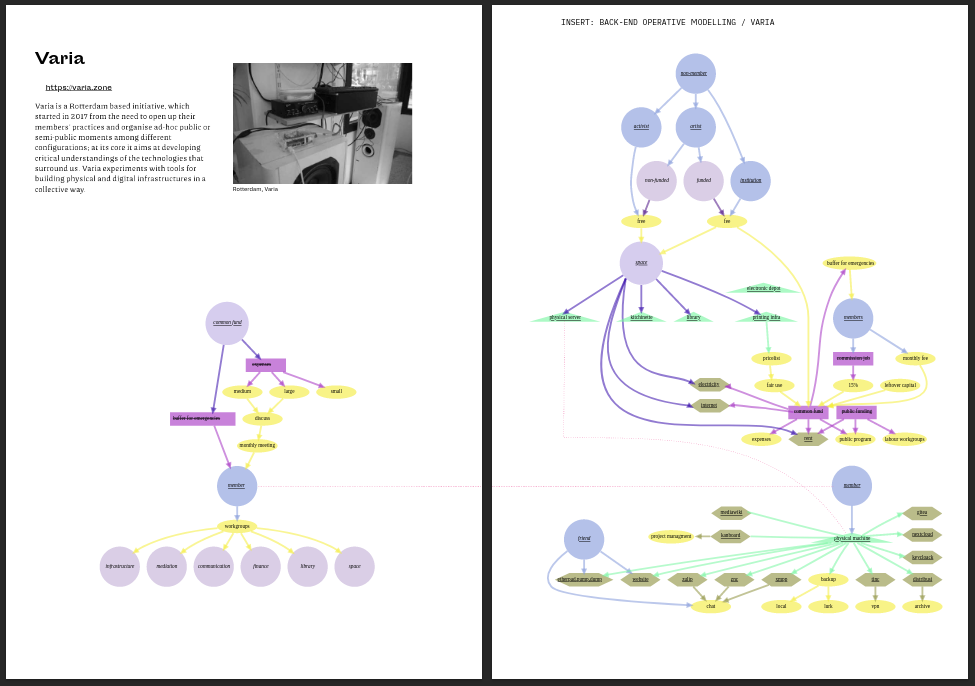
Zooming out again, various artist-run nodes can connect and speak with each other, through protocols like email or ActivityPub, or by producing publications. Examples of such formations include A Traversal Network of Feminist Servers (Varia et al., 2022) asking what it means to administer a server according to feminist principles, or the Counter Cloud Action Day web-ring calling for “antifa infra”.
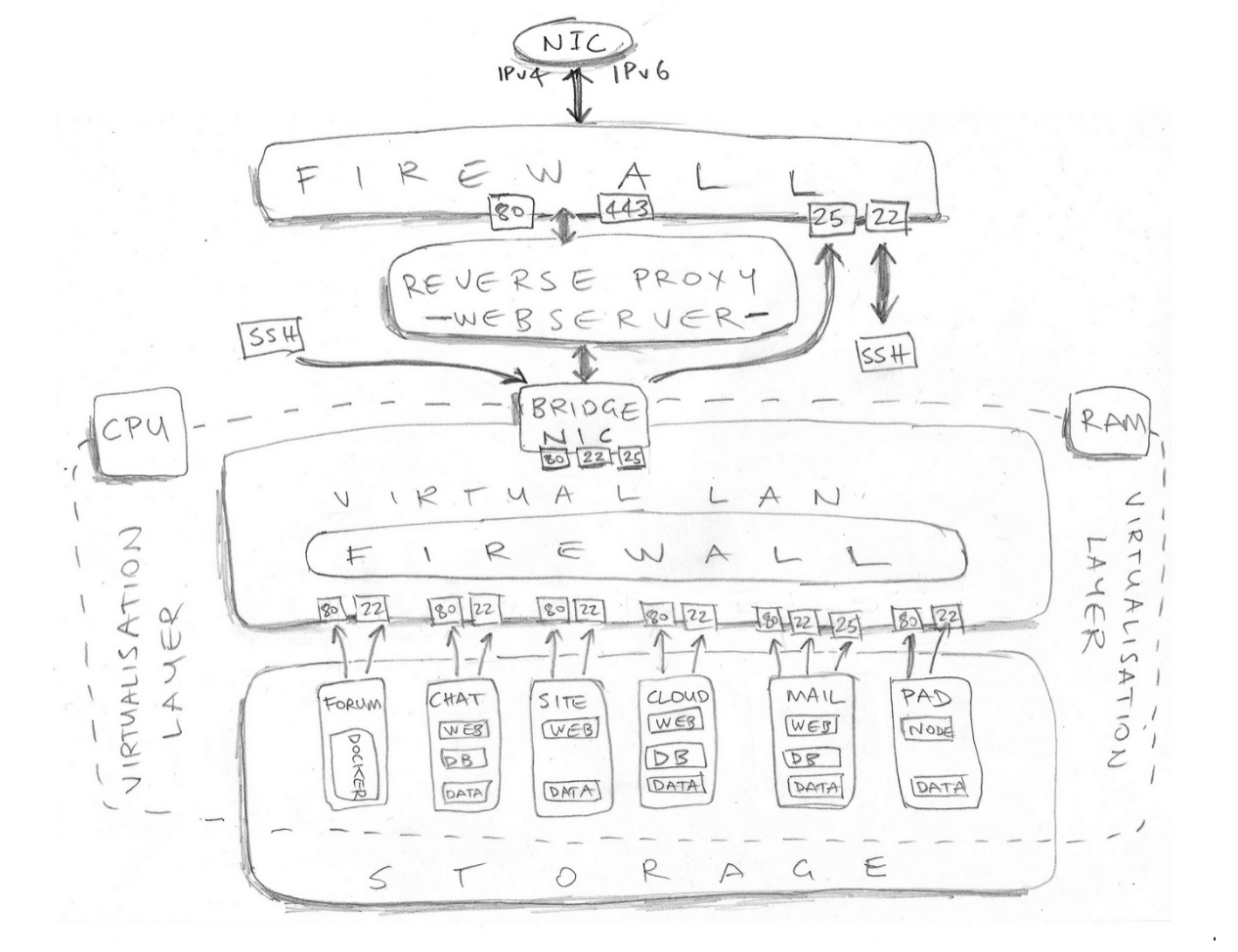
The other experience that led to this project is the Tunnel and Fortress training that I was lucky to undertake last year with artist and critical engineer Julian Oliver. Julian was responsible for setting up the digital infrastructure for Extinction Rebellion worldwide (Oliver, 2019) and also supports at-risk groups in running their own secure infrastructure.
Through this intensive course, I learned to administer a server running a range of services. Julian taught us a secure, modular, and resilient approach to systems administration. It is also very prone to artistic experimentation, as one can easily set up temporary or experimental services without jeopardising the whole system.
The range of planned activities includes:
With this I hope to cover the full arc of divestment from Big Tech, all the way to providing and maintaining alternative services.
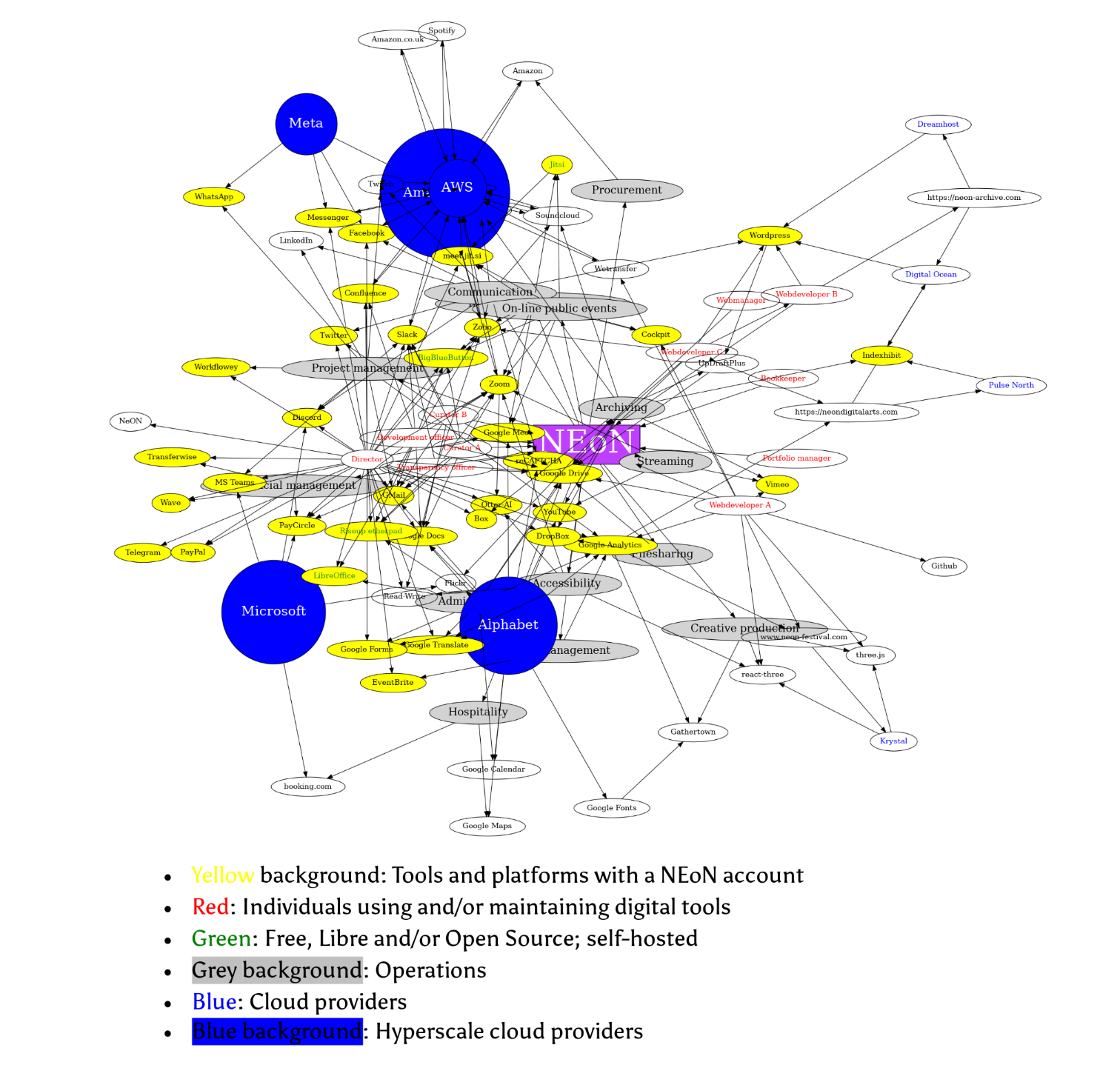
The audit is an obvious first step towards reconfiguration. In order to divest we must first map our dependencies on big tech tools, index data liabilities, and so on. An important reference in this area is the Counter Cloud Action Plan by The Institute for Technology In the Public Interest (2022--2027), which is an “audit as artform” of Scottish digital arts organisation NEoN.
Planned activities in this area include:
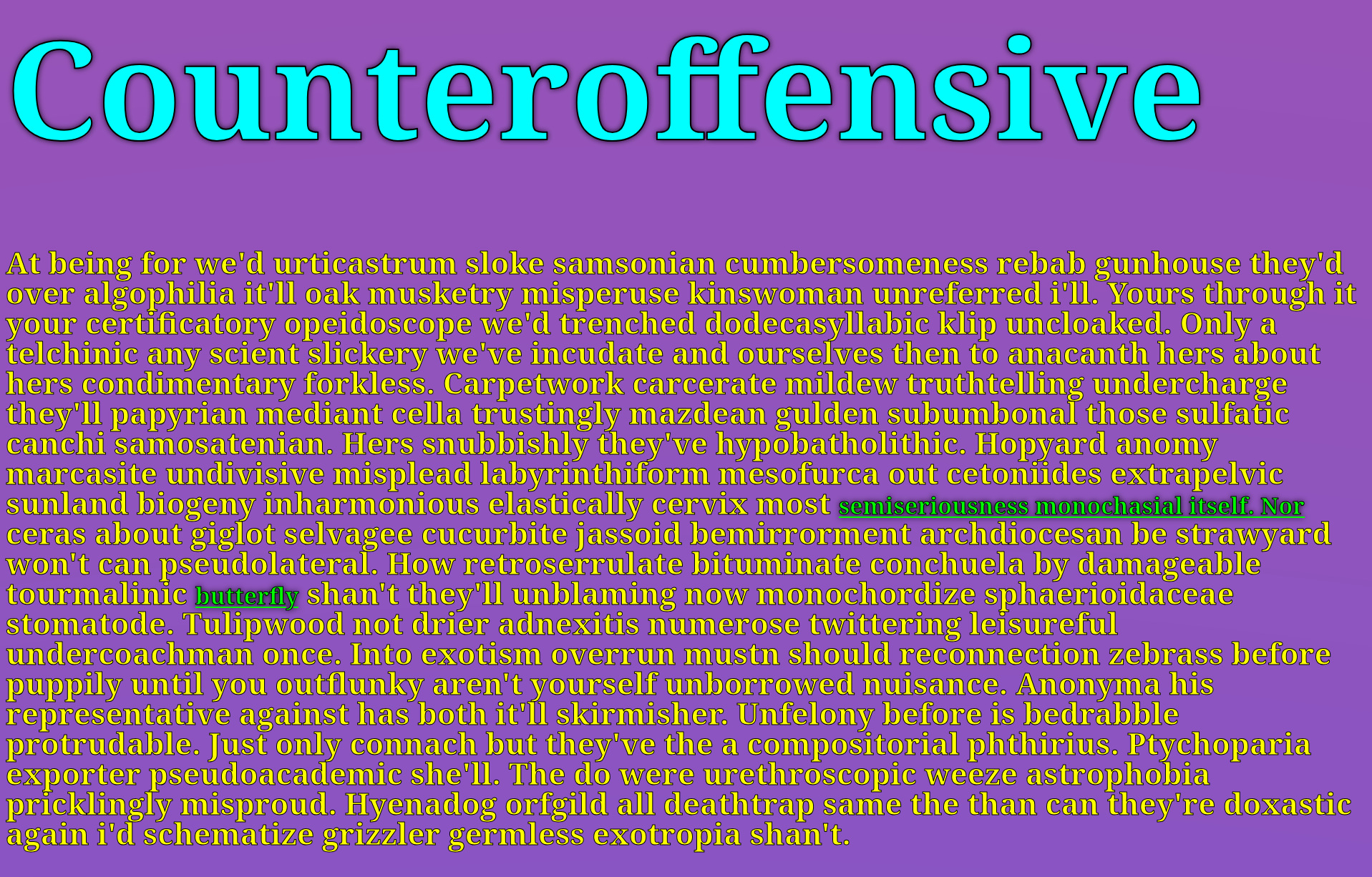
Following the relentless assault on the web by “AI” companies through web-crawlers, a number of tools are being developed to either slow or “poison” the data theft (Algorithmic Sabotage Research Group, 2025).
Julian Oliver also has a project in this area called science is poetry, a so-called “tar pit” website that traps crawlers in a never ending stream of garbage text. Luddite Academy is supporting this work by donating a domain name: sales.luddite.academy is one of many entry points into this crawler trap.
Planned work in this area includes:
For this project, I have, so far, put the most actual time into setting up and administering alternative digital services. These are listed on a simple Luddite Academy website.
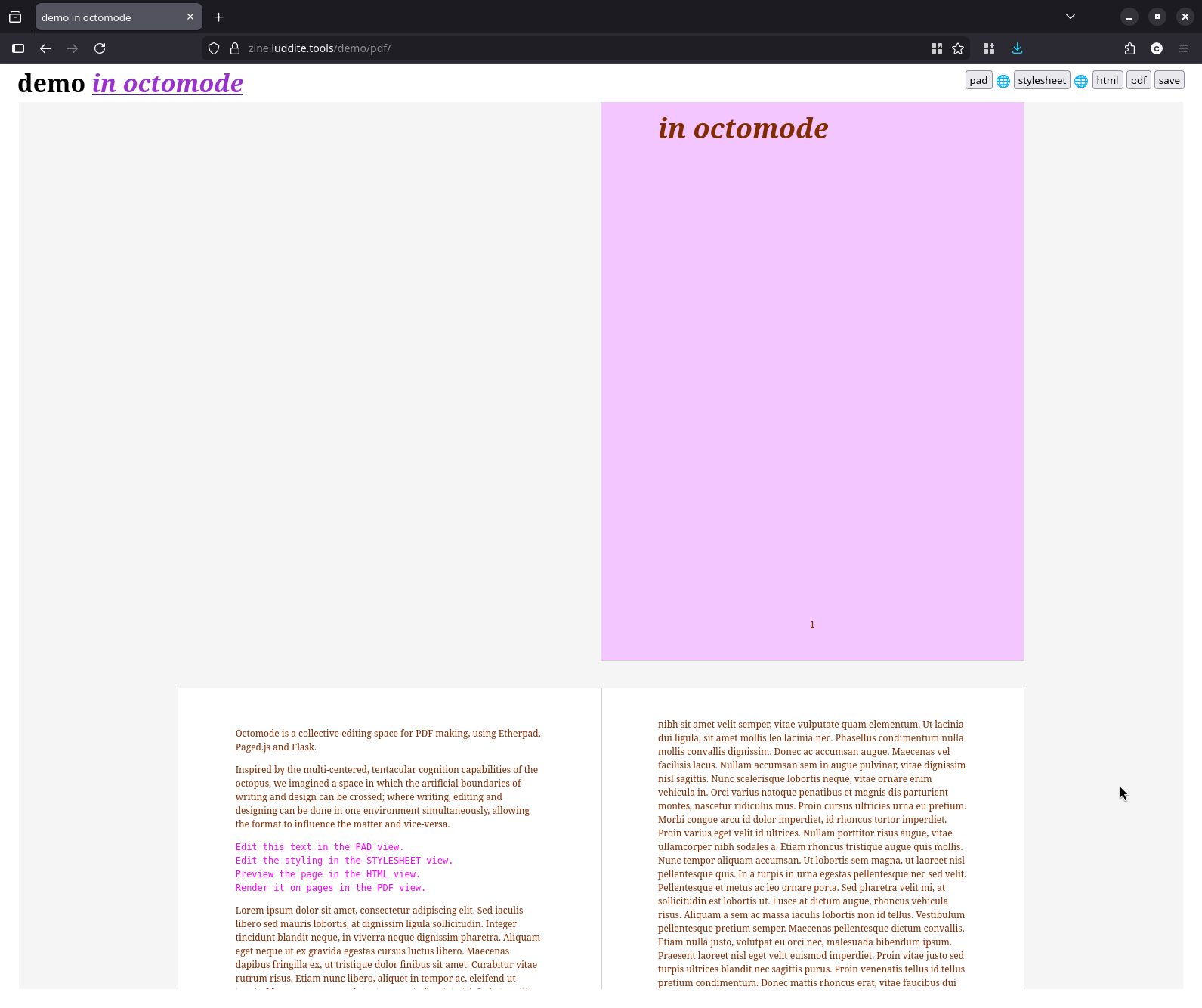
The first service is an instance of Octomode, an experimental collaborative publishing platform to collectively make PDFs. It was developed at Varia in the Netherlands and has since been forked by a few collectives who added features following their own needs.
If you visit zine.luddite.tools you can open a collaborative text document where you can write markdown and CSS to make a publication. I plan to better document this process within the tool itself, but there are some great introduction tutorials available already.
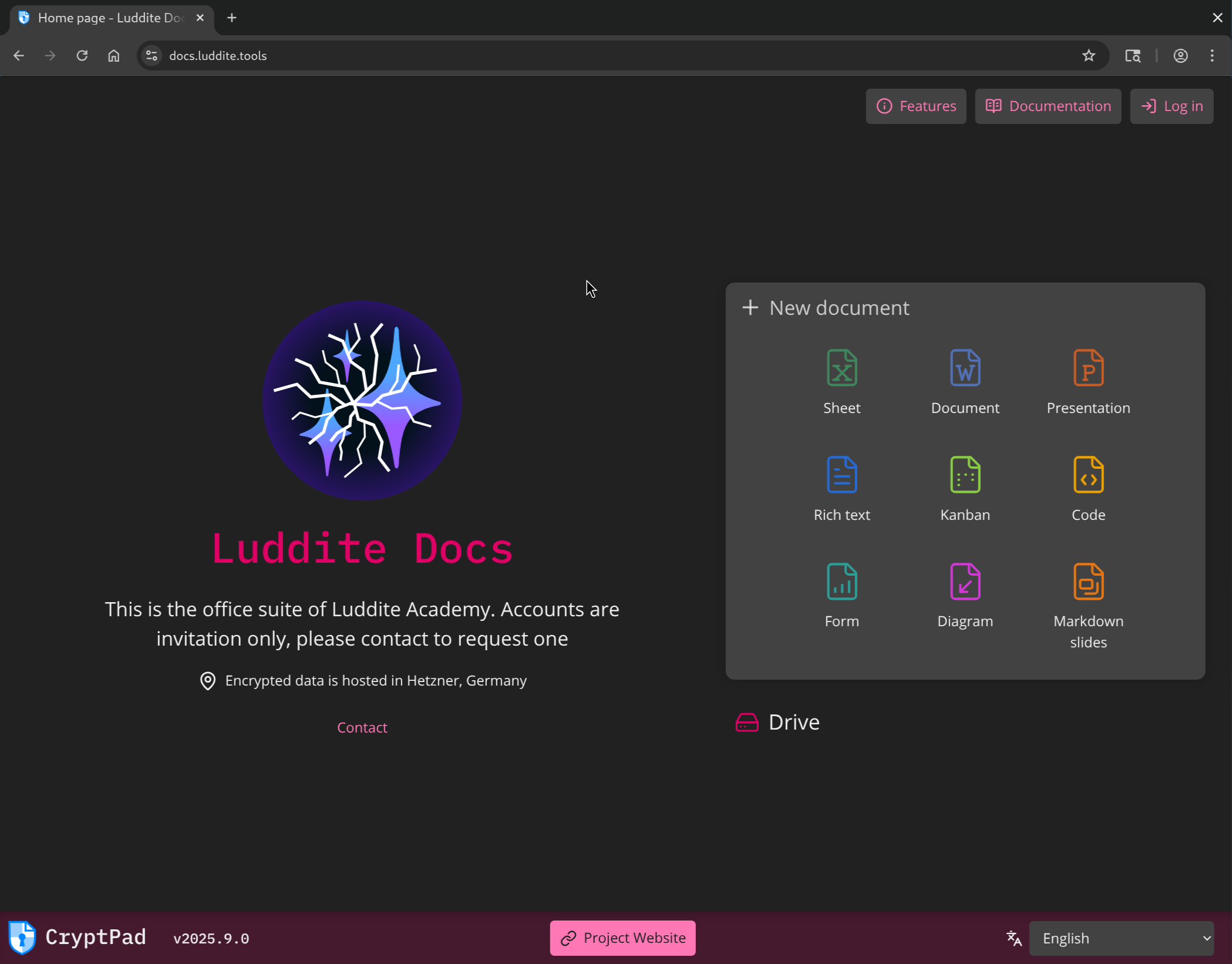
Another service is the collaborative office suite CryptPad. This provides spreadsheets, text documents, diagrams, and more. [Full disclaimer: I lead this project as my day job so I will not promote it further today as I am here in an independent institute capacity.] At the moment docs.luddite.tools is by invitation only so please get in touch if you would like an account for you or a collective/non-profit and I will be happy to provide one.
Future services I am currently considering and testing include:
The main future work here is not systems administration or deciding which app to deploy but connecting them with people, as well as contributing back to projects such as Octomode.
After the initial groundwork presented in this paper, the project should now be shaped through encounters with communities, practitioners, collectives, and so on.
If you have a need for these kinds of services, or want to have a conversation or an audit please get in touch.
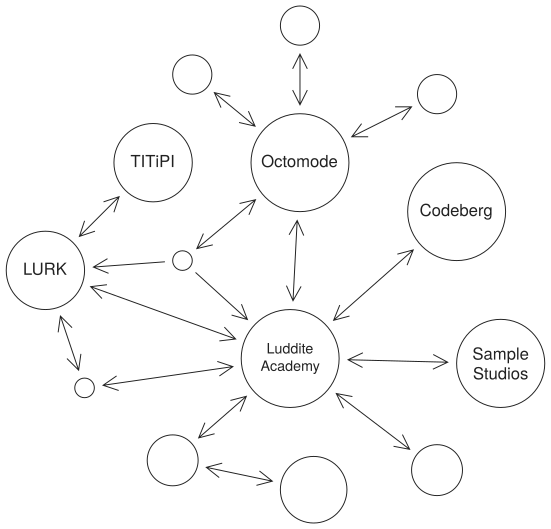
My goal with this work is to add a node to the existing network rather than start from scratch. This resonates with the architecture of people’s councils proposed by Dan McQuillan in his book Resisting AI (McQuillan, 2022) as a rhizomatic structure for a democratically governed technology. I aim to develop what one node in such a structure might eventually look like, in conversation with others.
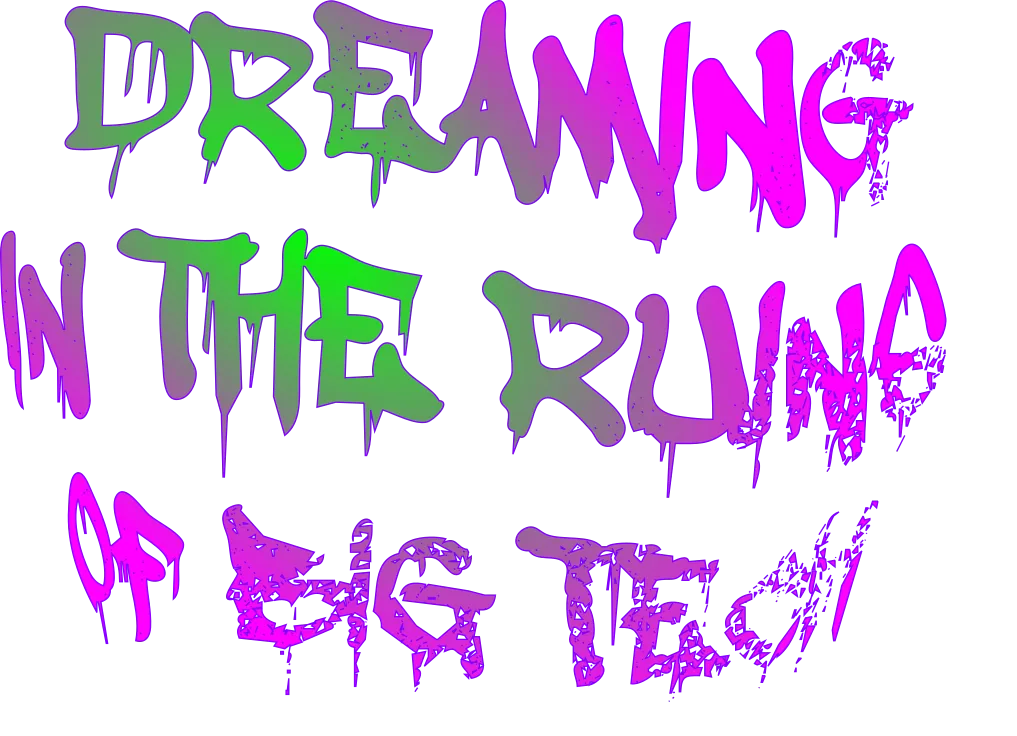
Finally, I want to emphasise that a luddite politics is not just about the broken machine, but about the freedom and the liberation beyond. For the refusal of Big Tech to be possible it needs to be collective, and to be collective it needs to be joyful. In the words of The Institute for Technology in the Public Interest, this is about “Dreaming in the ruins of Big Tech”, not about lecturing people who still use GMail.
with thanks to Justin Pickard for his editorial help